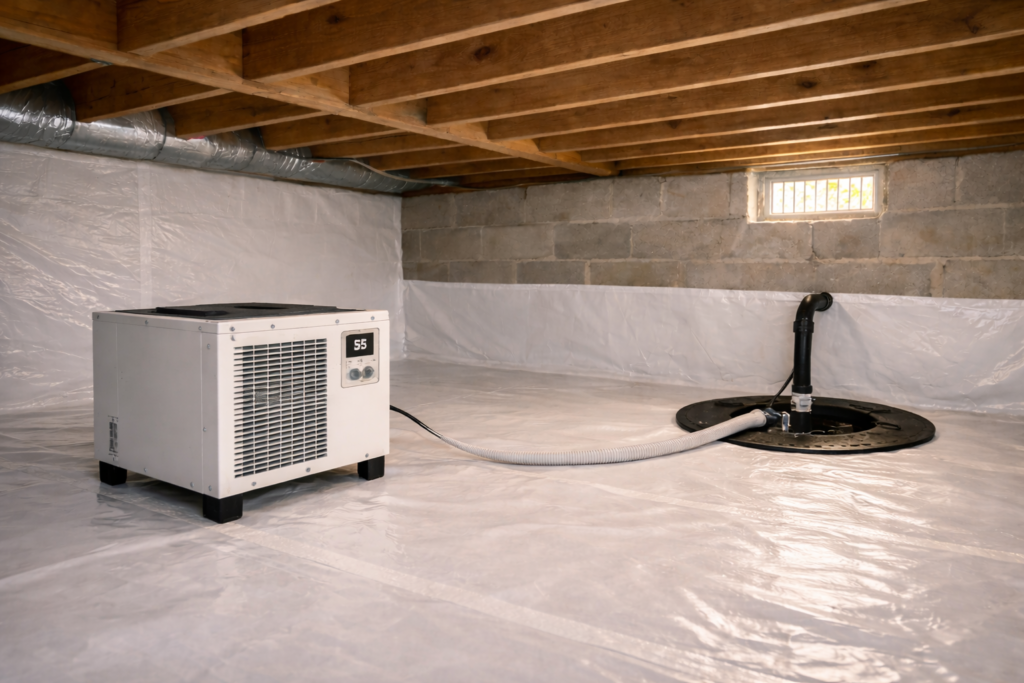
The best crawl space dehumidifier for most homes is a crawlspace-rated unit that matches the size of the space, the moisture level, the drainage route, and how difficult the area is to access. For many homeowners, the E070 Pro Dehumidifier Bundle is the strongest overall starting point because it is positioned as a complete crawl space and whole-house moisture-control option, but the best final choice depends on whether you need pump drainage, a compact setup, smart control, or a heavier-duty unit for a wet crawl space.
Crawl spaces are different from normal rooms. They are cooler, tighter, harder to service, and often exposed to ground moisture, so a standard portable room dehumidifier is usually not the best long-term answer. The products below are better suited to buyers comparing crawl space-specific dehumidifiers for sealed spaces, pump drainage, small crawl spaces, larger crawl spaces, mold prevention, and heavier moisture problems.
If you are not sure which capacity range fits your crawl space, start with sizing before choosing a product. Our guide on what size crawl space dehumidifier you need explains how to match the unit to square footage, moisture level, drainage, and sealed or vented conditions.
Quick Picks
- Best overall for most crawl spaces: E070 Pro Dehumidifier Bundle – 70 Pint Whole House Dehumidifier – Full Complete Kit – Crawl Spaces
- Best for pump drainage: BaseAire AirWerx 35P 70-Pint Crawlspace Dehumidifier with Pump
- Best for larger crawl spaces: ALORAIR Basement/Crawlspace Dehumidifiers
- Best for smaller crawl spaces: BaseAire Crawlspace Dehumidifier with Pump
- Best heavy-duty option: ALORAIR 180-Pint Crawlspace Dehumidifier with Pump
- Best for encapsulated crawl spaces: AprilAire E080W Smart Wi-Fi Whole-House Dehumidifier
If drainage is the main challenge, a pump-equipped unit may be a better fit than a gravity-drain model. Our best crawl space dehumidifier with pump guide compares options for crawl spaces where water needs to be moved away from the unit.
If your crawl space is around 1,500 sq ft, it may need more capacity than a small crawl space but not always a heavy-duty commercial unit. See our best crawl space dehumidifier for 1,500 sq ft guide for medium-to-large crawl space options.
If your crawl space is tight, low, or awkward to access, a full-size unit may not always be the most practical choice. In that case, a compact crawl space dehumidifier can be a better fit, provided it still has reliable drainage and enough capacity for the moisture problem.
If your crawl space is around 2,000 sq ft, it may need a stronger setup than a smaller or mildly damp crawl space. See our best crawl space dehumidifier for 2,000 sq ft guide for larger-space options, including sealed, vented, pump-equipped, and heavy-duty choices.
How to Choose the Right Crawl Space Dehumidifier
The right crawl space dehumidifier depends on more than the size of the crawl space. Square footage matters, but so do humidity level, sealing, drainage, temperature, and how easily the unit can be serviced after installation.
A sealed crawl space with mild humidity may only need a moderate crawlspace-rated unit. A vented, wet, or musty crawl space may need stronger capacity, better drainage, and possibly a pump-equipped setup. A very small crawl space may need a compact unit that can fit through the access opening and still leave enough room for airflow.
Drainage is one of the biggest decisions. If water can drain continuously downhill to a safe discharge point, a gravity drain may be enough. If the drain route needs to move upward or across an awkward path, a pump-equipped model is usually easier to plan around.
For more help choosing by size, see What Size Dehumidifier Do I Need for a Crawl Space? and How Many Pints Should a Crawl Space Dehumidifier Be?.
E070 Pro Dehumidifier Bundle – 70 Pint Whole House Dehumidifier – Full Complete Kit – Crawl Spaces
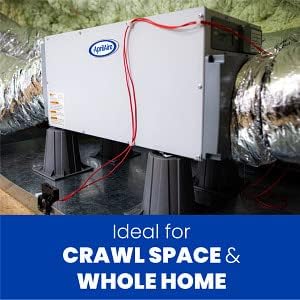
A crawl space and whole-house dehumidifier bundle suited to homeowners who want a purpose-built main option.Check current price
The E070 Pro Dehumidifier Bundle is the best overall choice on this page for homeowners who want one practical starting point for crawl space humidity control. It is positioned as a 70-pint whole-house and crawl space dehumidifier bundle, which makes it a better fit than a basic portable room unit for long-term crawl space use.
Best for: Homeowners who want a dedicated crawl space dehumidifier for normal to moderately demanding moisture control.
Why it fits most crawl spaces: It gives buyers a complete crawl space-focused option rather than forcing them to piece together a basic room dehumidifier, drainage setup, and installation plan separately.
Main limitation: It may not be the best fit for very large, wet, or commercial-style crawl spaces where higher capacity or built-in pump drainage is the main priority.
Choose this if: You want a strong all-round starting point for crawl space humidity control and your space is not extremely wet or difficult to drain.
Skip this if: You know you need a built-in pump, a compact unit for a tight space, or a heavy-duty setup for severe moisture.
BaseAire AirWerx 35P 70-Pint Crawlspace Dehumidifier with Pump
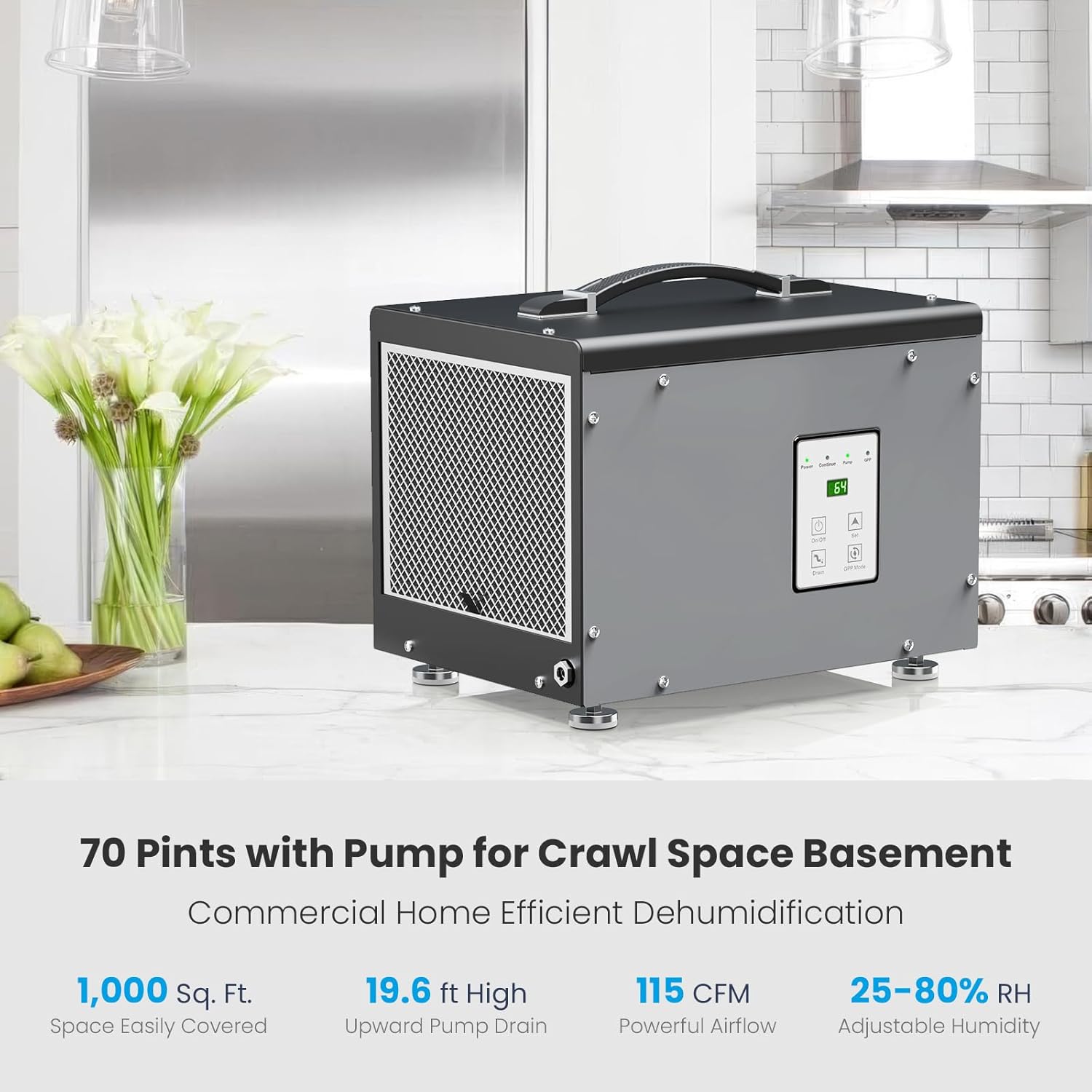
A pump-equipped crawl space dehumidifier for setups where gravity drainage is not convenient.Check current price
The BaseAire AirWerx 35P is the strongest choice here for buyers who already know they need pump drainage. In many crawl spaces, water cannot simply drain downward to a suitable floor drain, sump location, or exterior discharge point.
Best for: Crawl spaces where gravity drainage is difficult, impractical, or too limiting.
Why it fits pump-drainage situations: A pump-equipped model can make the installation more flexible when the collected water needs to move upward or across a longer path.
Main limitation: A pump adds another system component, so the drainage route still needs to be planned carefully and kept clear.
Choose this if: The dehumidifier cannot drain downhill to a suitable location and you want a pump-equipped crawlspace option.
Skip this if: Your crawl space already has an easy gravity drain route and you prefer the simplest setup possible.
For more detail, see Best Crawl Space Dehumidifier with Pump and Gravity Drain vs Pump Drain for Crawl Space Dehumidifiers.
ALORAIR Basement/Crawlspace Dehumidifiers
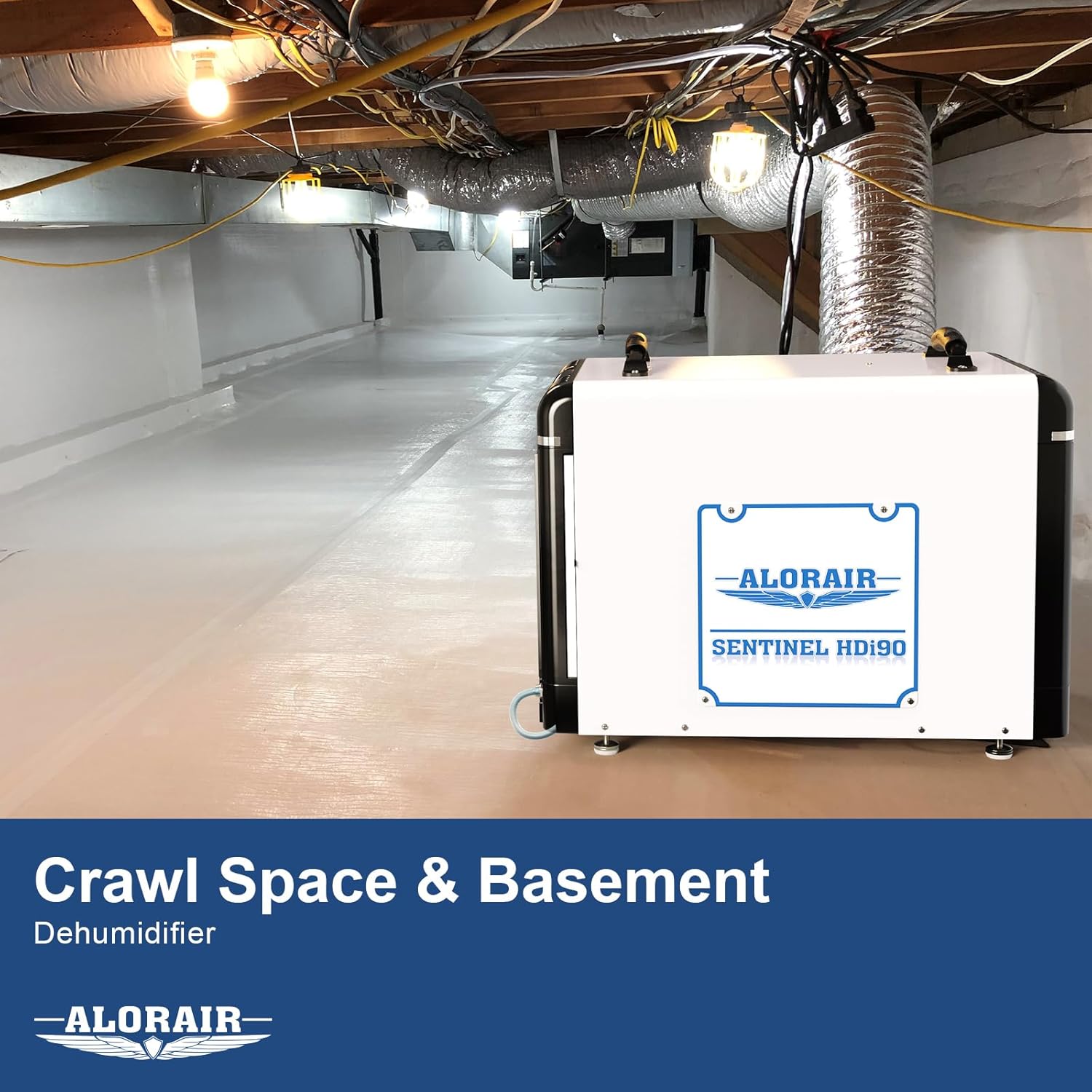
A basement and crawlspace-focused option for buyers dealing with larger areas or heavier moisture.Check current price
The ALORAIR Basement/Crawlspace Dehumidifiers option is best suited to homeowners comparing units for larger or more demanding crawl spaces. It is a useful option on this page because many buyers are not only looking for the cheapest dehumidifier; they are trying to avoid undersizing the unit for a damp or extended crawl space.
Best for: Larger crawl spaces, stronger moisture loads, and buyers who want a basement/crawlspace-focused product line.
Why it fits larger crawl spaces: A larger crawl space can need stronger moisture control than a small sealed space, especially if it is vented, musty, or difficult to dry.
Main limitation: The exact capacity and configuration should be checked on the product listing because ALORAIR crawlspace models can vary by version.
Choose this if: Your crawl space is larger, damp, or harder to control than a standard small crawl space.
Skip this if: You need a compact unit for a tight crawl space or a clearly pump-equipped model for difficult drainage.
BaseAire Crawlspace Dehumidifier with Pump

A smaller crawlspace pump option for buyers who want a practical setup without moving straight to heavy-duty capacity.Check current price
The BaseAire Crawlspace Dehumidifier with Pump is the more compact and simpler-use option in this set. It makes the most sense for smaller crawl spaces or buyers who want pump drainage but do not need the largest or most commercial-style unit on the page.
Best for: Smaller crawl spaces, simpler layouts, and buyers who want a pump-equipped crawlspace option.
Why it fits smaller crawl spaces: A compact crawl space can be hard to access and may not have room for a larger unit. This option keeps the focus on crawl space use while still giving the buyer pump drainage support.
Main limitation: It may not be the right choice for a large, very wet, or heavily used crawl space where a higher-capacity unit would be more appropriate.
Choose this if: Your crawl space is small, tight, or awkward to access and you still want pump drainage support.
Skip this if: Your crawl space is large, wet, or difficult to dry and needs stronger capacity.
For more compact-space options, see Best Crawl Space Dehumidifier for Small Crawl Spaces.
ALORAIR 180-Pint Crawlspace Dehumidifier with Pump

A high-capacity pump-equipped option for heavier crawl space moisture problems and commercial-style needs.Check current price
The ALORAIR 180-Pint Crawlspace Dehumidifier with Pump is the heavy-duty choice in this lineup. It is best considered when a crawl space has a larger moisture load, repeated dampness, or a more demanding setup where a smaller 70-pint class option may not be enough.
Best for: Heavy-duty crawl space use, larger moisture problems, and commercial-style dehumidifier needs.
Why it fits difficult crawl spaces: High-capacity positioning and pump drainage can be useful when the crawl space is large, wet, hard to dry, or difficult to drain by gravity.
Main limitation: It may be more unit than a small or mildly damp crawl space needs, so buyers should avoid oversizing without considering the actual conditions.
Choose this if: Your crawl space is wet, large, musty, repeatedly damp, or difficult to drain.
Skip this if: Your crawl space is sealed, mildly humid, and already easy to control.
For more heavy-duty options, see Best Commercial Crawl Space Dehumidifier.
AprilAire E080W Smart Wi-Fi Whole-House Dehumidifier

A smart Wi-Fi whole-house option suited to encapsulated crawl spaces and integrated humidity control.Check current price
The AprilAire E080W Smart Wi-Fi Whole-House Dehumidifier is the best fit here for buyers thinking about an encapsulated crawl space or a more integrated home humidity setup. In a sealed crawl space, the goal is usually stable moisture control rather than short bursts of manual drying.
Best for: Encapsulated crawl spaces, homeowners wanting smart Wi-Fi control, and setups where crawl space humidity is part of a broader home moisture strategy.
Why it fits encapsulated crawl spaces: Smart control and whole-house positioning can be useful when the crawl space is part of a more planned moisture-management setup.
Main limitation: It may require more planning than a basic standalone crawl space unit, especially if the installation is part of a larger whole-house setup.
Choose this if: Your crawl space is sealed or encapsulated and you want easier monitoring and smart humidity control.
Skip this if: You want a simple standalone crawl space-only unit with minimal installation planning.
For more sealed-space options, see Best Dehumidifier for Encapsulated Crawl Space.
Which Crawl Space Dehumidifier Should You Choose?
Choose the E070 Pro Dehumidifier Bundle if you want the strongest all-round starting point and your crawl space has normal to moderately demanding moisture-control needs. It is the most balanced choice for buyers who want a complete crawl space-focused setup.
Choose the BaseAire AirWerx 35P if drainage is the biggest problem and the water cannot drain away easily by gravity. Choose the BaseAire Crawlspace Dehumidifier with Pump if the crawl space is smaller or tighter and a compact pump-equipped setup makes more sense.
Choose the ALORAIR Basement/Crawlspace Dehumidifiers option if the crawl space is larger or more demanding. Choose the ALORAIR 180-Pint Crawlspace Dehumidifier with Pump when the space is wet, heavy-duty, or repeatedly difficult to dry.
Choose the AprilAire E080W if the crawl space is encapsulated and you want smart control as part of a broader home humidity setup.
Pump vs Gravity Drainage
Drainage should be planned before buying a crawl space dehumidifier. A gravity drain is usually simpler when the hose can run continuously downhill to a safe discharge point. This setup has fewer moving parts, but it only works when the location and slope make sense.
A pump-equipped dehumidifier is more useful when the water needs to move upward, across a longer route, or to a discharge point that is not lower than the unit. This can be common in crawl spaces where the best location for airflow is not the easiest location for drainage.
Buyers should not choose a pump only because it sounds better. Choose a pump when the drainage route requires it. For more detail, see Do Crawl Space Dehumidifiers Need a Drain Line? and Gravity Drain vs Pump Drain for Crawl Space Dehumidifiers.
What to Look For
- Match capacity to conditions: A small sealed crawl space with mild humidity does not need the same unit as a large, damp, or repeatedly wet crawl space.
- Check drainage before choosing: If water can flow downward to a suitable drain, gravity drainage may work. If not, a pump-equipped unit is usually easier to plan around.
- Choose a crawl space-specific design: Crawl spaces are cooler, tighter, and less accessible than living areas, so purpose-built units are usually more suitable than standard portable room dehumidifiers.
- Think about access and maintenance: Filter access, drain routing, and service space matter because crawl space units are harder to reach once installed.
- Avoid undersizing for persistent dampness: If the crawl space stays damp even after basic moisture fixes, a smaller unit may run too often and still struggle to control humidity.
- Do not buy only by pint rating: Drainage, crawl space layout, temperature conditions, and installation style can matter just as much as headline capacity.
The safest approach is to choose the smallest suitable crawlspace-rated unit that can control the actual moisture problem. Oversizing can waste money, but undersizing can leave the crawl space damp, musty, and difficult to control.
Frequently Asked Questions
What is the best crawl space dehumidifier for most homes?
For many homes, the best crawl space dehumidifier is a crawlspace-rated or whole-house unit with continuous drainage and enough capacity for the actual moisture level. The E070 Pro Dehumidifier Bundle is the strongest overall starting point on this page for normal to moderately demanding crawl spaces.
Do I need a crawl space dehumidifier with a pump?
You need a pump if gravity drainage is not practical. If the drain hose can run downhill to a safe discharge point, gravity drainage may work. If the water needs to move upward or across an awkward route, a pump-equipped model is usually easier.
Can I use a regular dehumidifier in a crawl space?
A regular room dehumidifier may help temporarily in mild conditions, but it is usually not the best long-term crawl space solution. Crawl spaces often need continuous drainage, low-clearance placement, durable operation, and easier service planning.
What size crawl space dehumidifier do I need?
The right size depends on crawl space square footage, moisture severity, sealing, drainage, and airflow. A small sealed crawl space may need less capacity than a smaller but vented and wet crawl space. Start with the sizing guide before choosing by pint rating alone.
Is a bigger crawl space dehumidifier always better?
No. A larger unit can be useful for wet, large, or difficult crawl spaces, but it may be unnecessary for a sealed and mildly humid space. The best choice is the unit that matches the moisture load without being harder or more expensive than needed.
If your crawl space is large, wet, musty, or repeatedly difficult to dry, a standard crawlspace unit may not be enough. For heavier moisture problems, compare the options in our best commercial crawl space dehumidifier guide.
Final Recommendation
For most homeowners, the E070 Pro Dehumidifier Bundle – 70 Pint Whole House Dehumidifier – Full Complete Kit – Crawl Spaces is the best overall choice because it is a practical crawl space-focused starting point and suits buyers who want a complete main option.
If drainage is the main challenge, the BaseAire AirWerx 35P 70-Pint Crawlspace Dehumidifier with Pump is the better fit because it is built around pump drainage. For smaller crawl spaces, the BaseAire Crawlspace Dehumidifier with Pump is the more compact pump-equipped option.
For larger or more demanding crawl spaces, the ALORAIR Basement/Crawlspace Dehumidifiers option or the ALORAIR 180-Pint Crawlspace Dehumidifier with Pump may make more sense, depending on the actual moisture load and installation requirements. For encapsulated spaces, the AprilAire E080W Smart Wi-Fi Whole-House Dehumidifier is the better fit for buyers who want smart control and integrated humidity management.
Buyers with smaller crawl spaces should avoid jumping straight to the largest heavy-duty unit unless the moisture problem justifies it. Buyers with a large, damp, or repeatedly wet crawl space should be careful about choosing a smaller unit just because it looks easier to install.
Related Guides
- What Size Dehumidifier Do I Need for a Crawl Space?
- How Many Pints Should a Crawl Space Dehumidifier Be?
- Best Crawl Space Dehumidifier for Small Crawl Spaces
- Best Crawl Space Dehumidifier for 2,000 sq ft
- Best Crawl Space Dehumidifier with Pump
- Best Commercial Crawl Space Dehumidifier
- Best Dehumidifier for Encapsulated Crawl Space