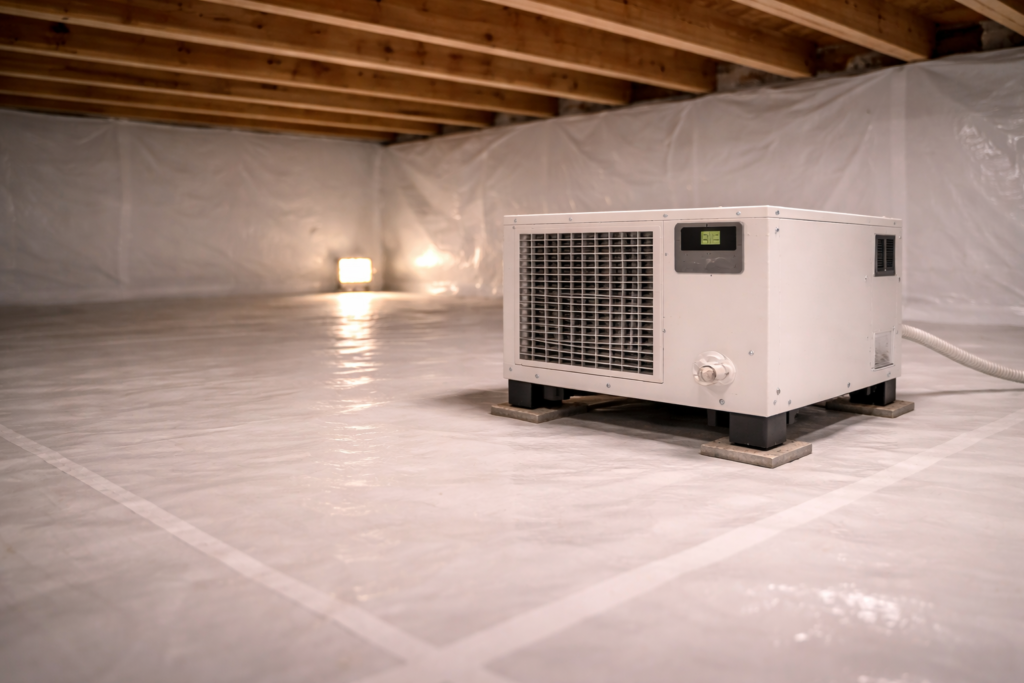
The best energy efficient crawl space dehumidifier is one that removes moisture effectively while minimizing electricity use. Efficiency is not just about low wattage — it’s about how much moisture the unit removes per unit of energy.
Because crawl space units often run for extended periods, selecting an efficient model can reduce long-term operating cost without sacrificing humidity control.
What Makes a Crawl Space Dehumidifier Energy Efficient?
An energy-efficient model should:
-
Remove high pints per kilowatt-hour
-
Reach target humidity quickly
-
Cycle normally once stabilized
-
Operate effectively in cooler conditions
If you’re still determining the correct capacity, start with What Size Dehumidifier Do I Need for a Crawl Space?
To understand moisture removal ratings, see How Many Pints Should a Crawl Space Dehumidifier Be?
Proper sizing is one of the biggest efficiency factors.
Energy Star Certification
Many crawl space dehumidifiers carry Energy Star certification.
Energy Star models typically:
-
Meet federal efficiency standards
-
Use optimized compressor systems
-
Improve airflow and coil design
While certification alone does not guarantee best performance, it is a strong baseline indicator.
Proper Sizing Prevents Energy Waste
Efficiency drops when:
-
The unit is undersized and runs nonstop
-
The unit is oversized and short cycles
The ideal pattern is steady humidity control with normal cycling.
For a step-by-step selection framework, see How to Choose a Crawl Space Dehumidifier.
Adjustable Humidity Controls
Efficient models include:
-
Digital humidistat controls
-
Adjustable RH settings
-
Automatic cycling
Setting the humidity too low (below 45%) increases runtime and energy use. The recommended target range is:
45%–55% relative humidity
Airflow and Installation Matter
Even the most efficient unit will waste energy if airflow is restricted.
Ensure:
-
Clear intake and exhaust space
-
Proper central placement
-
Unobstructed drainage
For placement guidance, see Where Should You Place a Dehumidifier in a Crawl Space?
Low-Temperature Performance
Crawl spaces can run cooler than living areas. Units designed for low-temperature operation maintain efficiency without freezing or excessive defrost cycles.
If winter performance is important in your climate, compare options in Best Low Temperature Crawl Space Dehumidifier.
Estimating Operating Cost
Efficiency directly affects long-term cost.
If you want to estimate runtime cost based on wattage and usage, review How Much Does It Cost to Run a Crawl Space Dehumidifier?
Reducing moisture intrusion through encapsulation and proper drainage also lowers overall runtime.
Final Thoughts
The best energy efficient crawl space dehumidifier combines:
-
Proper capacity
-
High moisture removal per watt
-
Stable humidity control
-
Low-temperature capability
-
Clean airflow design
Efficiency is not about choosing the smallest unit. It is about selecting the right unit that maintains humidity without running constantly.
When correctly sized and installed, an energy-efficient model can provide reliable moisture control with predictable operating costs.