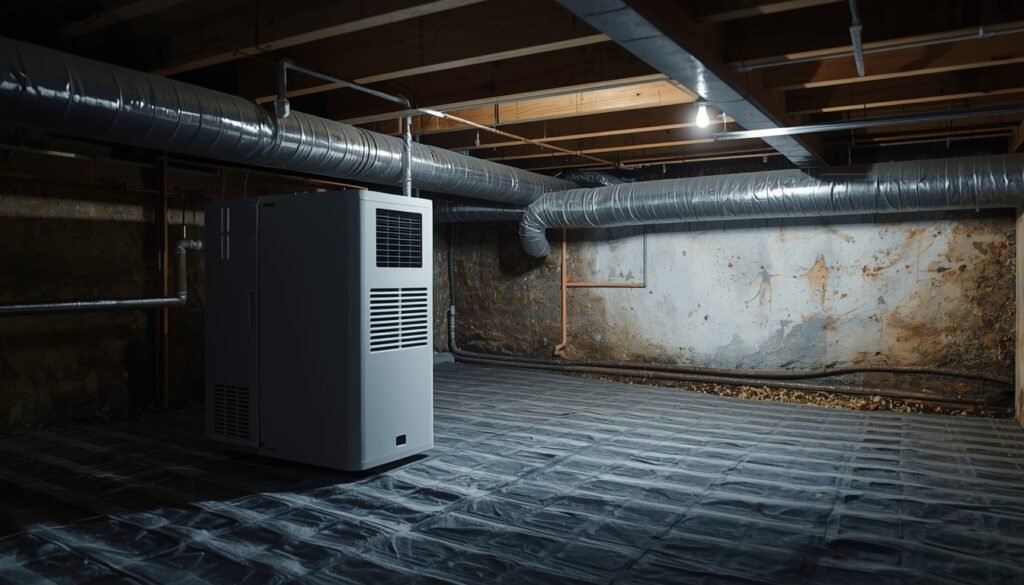
In most homes, crawl space dehumidifiers are installed to reduce moisture, prevent mold, and improve air quality. A common issue is uncertainty about whether these systems actually work, especially when results are not immediately visible. Many people find themselves questioning if the unit is effective or if the problem lies elsewhere.
The short answer is yes — crawl space dehumidifiers do work, but only when the conditions are right. This typically happens when the unit is properly sized, installed correctly, and used in a controlled environment.
What a Crawl Space Dehumidifier Actually Does
A crawl space dehumidifier removes moisture from the air to lower humidity levels.
A common issue is expecting it to eliminate all moisture instantly. Many people find that results take time and depend on the surrounding conditions.
This typically happens because:
- The unit pulls in humid air
- Moisture is condensed and removed
- Drier air is released back into the space
Over time, this process reduces overall humidity and helps prevent mold and damp conditions.
When Crawl Space Dehumidifiers Work Well
- The unit is correctly sized for the crawl space
- The area is sealed or encapsulated
- Moisture sources are controlled
- The system runs consistently over time
- Drainage is set up properly
In these conditions, many people find that humidity levels drop and the crawl space becomes noticeably drier.
When They Don’t Work As Expected
- The crawl space is not sealed and outside air enters freely
- There is ongoing water intrusion from the ground or walls
- The unit is too small for the space
- Drainage is not working correctly
- The system is not running long enough
In most homes, poor performance is usually caused by these factors rather than the dehumidifier itself.
The Importance of Correct Sizing
One of the biggest factors in performance is choosing the right size unit.
A common issue is installing a unit that cannot handle the moisture load. Many people find that the dehumidifier runs continuously but does not reduce humidity effectively.
This typically happens when the unit’s capacity is too low for the space. If you are unsure about sizing, it helps to review what size dehumidifier do I need for a crawl space to ensure the unit matches your conditions.
Sealing and Encapsulation Matter
In most homes, a crawl space that is open or poorly sealed will allow humid air to enter continuously.
A common issue is expecting the dehumidifier to overcome constant moisture intrusion. Many people find that results improve significantly after sealing the space.
This typically happens when:
- A vapor barrier is installed
- Vents are sealed
- Air leaks are reduced
Without these steps, the unit may struggle to maintain lower humidity levels.
What Affects How Well It Works
- Size of the crawl space
- Level of moisture intrusion
- Quality of sealing or encapsulation
- Temperature and climate conditions
- Placement of the unit
These factors determine how effectively the system can control humidity.
Real-World Expectations
In most homes, crawl space dehumidifiers work gradually rather than instantly.
A common issue is expecting immediate results. Many people find that it can take time for humidity levels to drop, especially in heavily damp spaces.
This typically means:
- Continuous operation is required
- Results improve over days or weeks
- Conditions must be stable for best performance
Understanding this helps set realistic expectations.
When It Might Not Be Enough
There are situations where a dehumidifier alone is not enough to solve the problem.
A common issue is relying on the unit without addressing underlying moisture sources. Many people find that humidity remains high despite continuous operation.
This typically happens when:
- Water is entering from outside
- Drainage problems are not fixed
- The crawl space is not sealed
If your crawl space remains damp even with a unit installed, it helps to review why your crawl space is still damp after using a dehumidifier to identify possible causes.
Quick Ways to Improve Effectiveness
- Choose the correct size unit for the space
- Seal the crawl space to prevent outside air intrusion
- Install a vapor barrier if one is not present
- Ensure proper drainage for collected water
- Allow the unit to run consistently
These steps often improve results significantly.
Final Thoughts
In most homes, crawl space dehumidifiers do work when used correctly. A common issue is expecting them to solve all moisture problems without addressing the conditions around them.
Many people find that once sizing, sealing, and moisture sources are properly managed, the unit becomes highly effective. This typically leads to a drier crawl space, reduced mold risk, and improved overall conditions.
By focusing on both the dehumidifier and the environment it operates in, you can achieve reliable and long-lasting results.
Related Guides
Where Should You Place a Dehumidifier in a Crawl Space?
Do Crawl Space Dehumidifiers Need a Drain Line?
Crawl Space Dehumidifier Maintenance Checklist