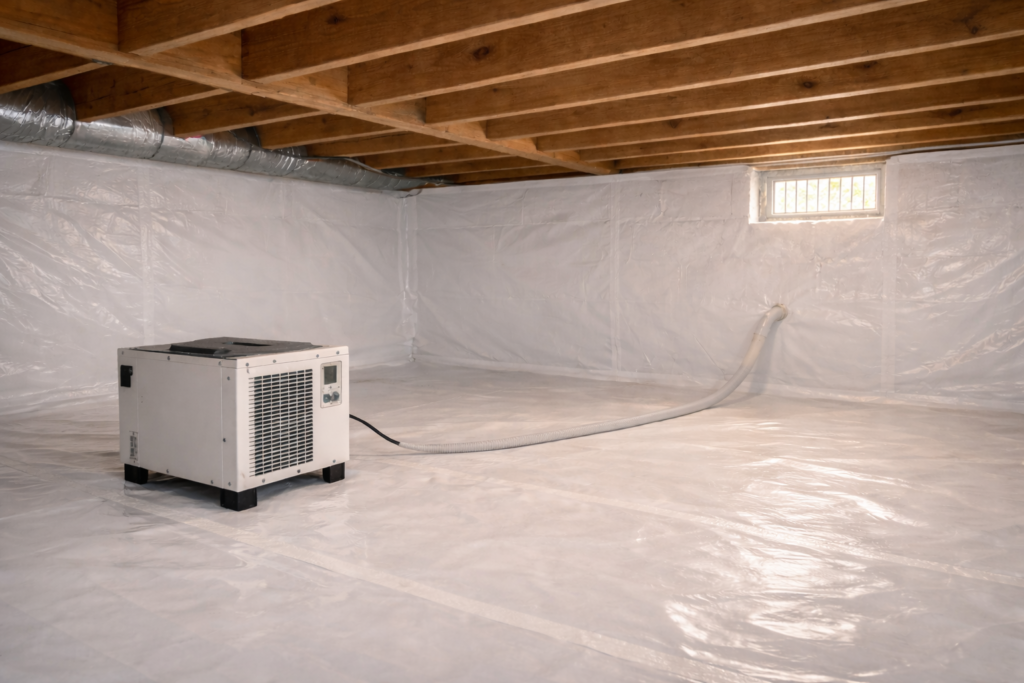
A sealed (encapsulated) crawl space is designed to reduce outside moisture intrusion. Vapor barriers are installed on the floor and walls, vents are closed, and the space is isolated from outdoor air.
However, sealing alone does not always eliminate humidity. In many cases, a dehumidifier is still necessary to maintain stable moisture levels.
What a Sealed Crawl Space Actually Does
Encapsulation helps by:
-
Blocking ground moisture
-
Reducing humid outside air entry
-
Creating a more controlled environment
But sealed does not mean dry.
Moisture can still enter from:
-
Small air leaks
-
Plumbing penetrations
-
Concrete foundation walls
-
Residual construction moisture
Because the space is enclosed, trapped humidity may linger without active control.
Ideal Humidity Target
Even in a sealed crawl space, humidity should typically stay between:
45%–55% relative humidity
If levels rise above 60%, mold risk increases.
For more detail on target levels, see Ideal Humidity Level for a Crawl Space.
When a Dehumidifier Is Recommended
You likely need a dehumidifier in a sealed crawl space if:
-
Humidity consistently exceeds 55–60%
-
You notice musty odors
-
There is visible condensation on ducts or pipes
-
The home is located in a humid climate
In many regions, a sealed crawl space still requires mechanical moisture control for year-round stability.
If you’re deciding which system to install, start with How to Choose a Crawl Space Dehumidifier.
When You Might Not Need One
In dry climates, a properly sealed crawl space may maintain acceptable humidity levels without a dedicated dehumidifier.
This is more common in:
-
Arid regions
-
Homes with conditioned air supply into the crawl space
-
Newly encapsulated systems with good air sealing
However, monitoring is still important.
Size and Capacity Considerations
Sealed crawl spaces often require:
-
Smaller capacity units
-
More consistent, low-level operation
-
Stable humidity control rather than aggressive moisture removal
For proper sizing, see What Size Dehumidifier Do I Need for a Crawl Space?
For encapsulated environments specifically, compare options in Best Dehumidifier for Encapsulated Crawl Space.
How Sealed Spaces Differ From Vented Spaces
Vented crawl spaces:
-
Experience larger seasonal humidity swings
-
Often require higher capacity units
-
May run longer during summer
Sealed crawl spaces:
-
Have more stable moisture levels
-
Are easier to control
-
Typically operate more efficiently with a matched unit
Encapsulation reduces moisture load, but active humidity management often remains necessary.
The Bottom Line
In most climates, yes — a sealed crawl space still benefits from a dehumidifier.
Encapsulation reduces moisture entry, but it does not eliminate humidity entirely. A properly sized unit helps maintain consistent levels between 45% and 55% relative humidity.
Monitoring humidity regularly will tell you whether active control is required in your specific environment.