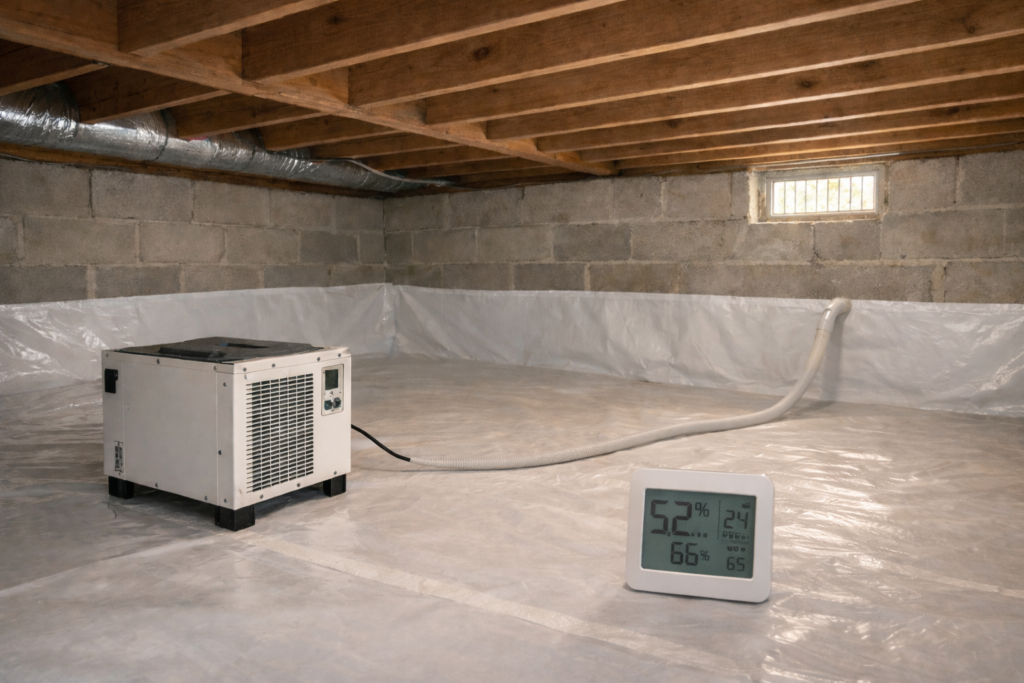
Maintaining the right humidity level in a crawl space helps prevent mold growth, wood rot, and musty odors. Because crawl spaces sit below the main living area, moisture problems can eventually affect floors, insulation, and indoor air quality.
The ideal relative humidity (RH) range for most crawl spaces is:
45% to 55%
This range keeps moisture low enough to prevent mold while avoiding overly dry conditions.
Why 45%–55% Is Recommended
Humidity below 60% reduces the risk of:
-
Mold growth
-
Mildew
-
Condensation on ducts or pipes
-
Wood moisture damage
Once humidity rises above 60%, mold spores can begin to grow on organic materials such as wood framing and subflooring.
If you’re choosing a system to control humidity, see How to Choose a Crawl Space Dehumidifier for a full overview.
What Happens If Humidity Is Too High?
When crawl space humidity stays above 60%, you may notice:
-
Musty smells inside the home
-
Damp insulation
-
Visible condensation
-
Increased wood moisture content
Over time, high humidity can weaken structural components and encourage pest activity.
If you’re unsure what capacity unit is needed to correct high humidity, review What Size Dehumidifier Do I Need for a Crawl Space?
Can a Crawl Space Be Too Dry?
Extremely low humidity is uncommon but possible in certain climates.
If humidity consistently drops below 35%:
-
Wood may shrink slightly
-
Dust levels may increase
-
The dehumidifier may be oversized
For a deeper explanation, see Can a Crawl Space Be Too Dry?
In most regions, however, the greater concern is excess moisture rather than dryness.
Sealed vs Vented Crawl Spaces
Humidity control behaves differently depending on whether the crawl space is encapsulated.
Encapsulated (sealed) crawl spaces:
-
Maintain more stable humidity
-
Respond better to dehumidifiers
-
Are easier to keep within the 45%–55% range
Vented crawl spaces:
-
Experience seasonal swings
-
Allow outside humid air inside
-
May require longer run times
If your space is sealed, compare options in Best Dehumidifier for Encapsulated Crawl Space.
How to Measure Crawl Space Humidity
Use a digital hygrometer to check relative humidity.
Place it:
-
Away from direct airflow
-
At mid-height if possible
-
In the central area of the crawl space
Take readings at different times of day during humid seasons to understand fluctuations.
How Long Should a Dehumidifier Run?
In humid climates, crawl space dehumidifiers may run frequently during summer months.
If you’re unsure what’s normal, read How Long Should a Crawl Space Dehumidifier Run?
A properly sized unit should cycle on and off once humidity stabilizes, rather than running constantly.
Final Thoughts
The ideal humidity level for most crawl spaces is 45%–55% relative humidity.
This range:
-
Reduces mold risk
-
Protects wood framing
-
Helps maintain healthier air above
Regular monitoring and properly sized equipment are the keys to keeping humidity within this safe range long term.