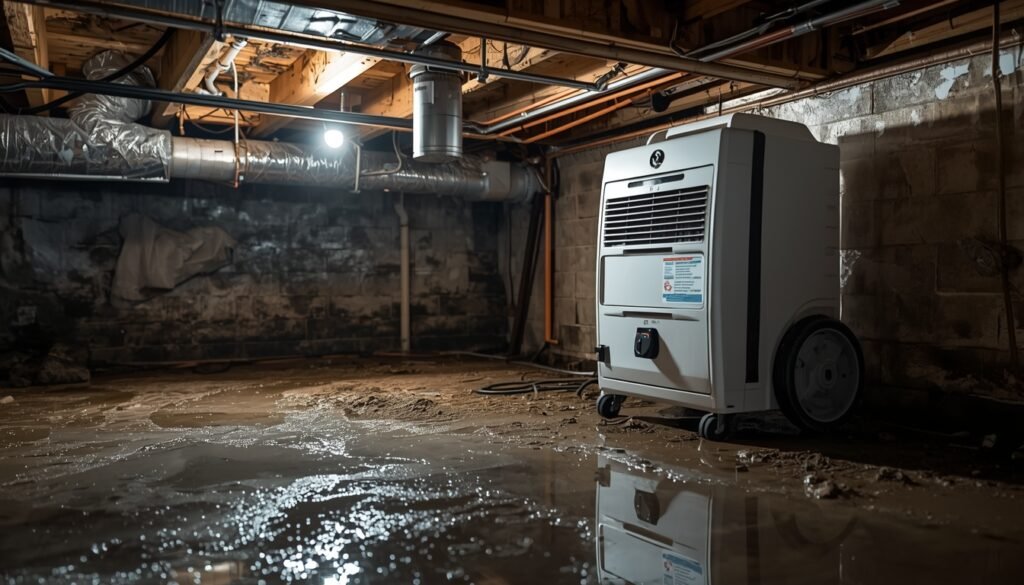
In most homes, installing a crawl space dehumidifier is expected to solve moisture problems quickly. A common issue is finding that the crawl space still feels damp even after the unit has been running for some time. Many people find this frustrating, especially after investing in a system designed to control humidity.
This typically happens when there are underlying conditions preventing the dehumidifier from working effectively. In many cases, the unit itself is not the problem—it is the environment or setup that limits its performance.
Signs Your Crawl Space Is Still Too Damp
- The air feels humid or sticky even with the unit running
- Musty smells remain or return quickly
- Surfaces feel damp to the touch
- Condensation appears on pipes or walls
- Mold or mildew signs persist
These signs usually indicate that moisture levels are not being reduced effectively.
The Dehumidifier Is Undersized
In most homes, one of the most common causes is using a dehumidifier that is too small for the space.
A common issue is expecting a unit with limited capacity to handle a large or heavily damp crawl space. Many people find that the system runs constantly but cannot lower humidity enough.
This typically happens when the unit’s pint capacity does not match the size or moisture load of the crawl space. If you are unsure about sizing, it helps to review what size dehumidifier do I need for a crawl space to ensure the unit is appropriate for your conditions.
Ongoing Moisture Sources
A dehumidifier removes moisture from the air, but it does not stop moisture from entering the space.
A common issue is continuous moisture intrusion. Many people find that water keeps entering the crawl space from outside sources.
This typically happens due to:
- Ground moisture rising through soil
- Poor drainage around the home
- Leaks or plumbing issues
- High humidity entering through vents
If moisture is constantly entering the space, the dehumidifier may never fully catch up.
Poor Sealing or Encapsulation
In most homes, crawl spaces are not fully sealed.
A common issue is outside air entering freely. Many people find that humid air from outside replaces the air being dried by the dehumidifier.
This typically happens when:
- The crawl space is vented
- Gaps or openings are not sealed
- There is no vapor barrier
In these cases, the dehumidifier is working against a constant flow of new moisture.
Incorrect Placement of the Unit
Where the dehumidifier is placed can affect how well it works.
A common issue is placing the unit in a location where airflow is limited. Many people find that moisture levels remain uneven throughout the crawl space.
This typically happens when:
- The unit is too close to walls
- Air cannot circulate freely
- The space has multiple sections or obstructions
Proper placement helps ensure the unit can draw in and process humid air effectively.
What Causes a Crawl Space to Stay Damp
- Undersized dehumidifier for the space
- Continuous moisture entering from outside
- Lack of proper sealing or encapsulation
- Poor airflow within the crawl space
- High humidity levels in surrounding areas
These factors often combine, making it harder for the system to control moisture.
The Dehumidifier Needs More Time
In some cases, the issue is simply time.
A common issue is expecting immediate results. Many people find that it takes longer than expected to reduce humidity levels.
This typically happens when the crawl space has been damp for a long time. The unit must remove moisture not only from the air but also from surfaces and materials.
If you are unsure how long the process should take, it helps to understand how long it takes to dry a crawl space under normal conditions.
Drainage and Water Removal Issues
A dehumidifier must be able to remove the water it collects.
A common issue is improper drainage. Many people find that the unit stops working efficiently when water is not draining correctly.
This typically happens when:
- The drain line is blocked
- The pump is not functioning properly
- Water collects in the unit instead of being removed
If drainage is not working as intended, moisture levels can remain high.
When the Dehumidifier May Not Be Enough
In some situations, a dehumidifier alone cannot fully solve the problem.
A common issue is relying on the unit without addressing other moisture sources. Many people find that humidity remains high despite continuous operation.
This typically happens when:
- Water intrusion is significant
- The crawl space is not sealed
- External conditions are very humid
If you are unsure whether a dehumidifier alone is enough, it helps to review do crawl space dehumidifiers actually work to understand their limitations.
Quick Ways to Improve Results
- Check that the unit is correctly sized for the crawl space
- Seal gaps and consider adding a vapor barrier
- Improve drainage around the home
- Ensure proper airflow and placement of the unit
- Confirm the drain system is working correctly
These steps often make a noticeable difference in reducing moisture levels.
Final Thoughts
In most homes, a crawl space remaining damp after installing a dehumidifier is not caused by a faulty unit. A common issue is overlooking the conditions that allow moisture to enter or remain in the space.
Many people find that once these underlying issues are addressed, the dehumidifier becomes far more effective. This typically leads to a drier, healthier crawl space and fewer ongoing moisture problems.
By focusing on sizing, sealing, and moisture control, you can get the full benefit of your crawl space dehumidifier and achieve more consistent results.
Related Guides
Where Should You Place a Dehumidifier in a Crawl Space?
Do Crawl Space Dehumidifiers Need a Drain Line?
Crawl Space Dehumidifier Maintenance Checklist