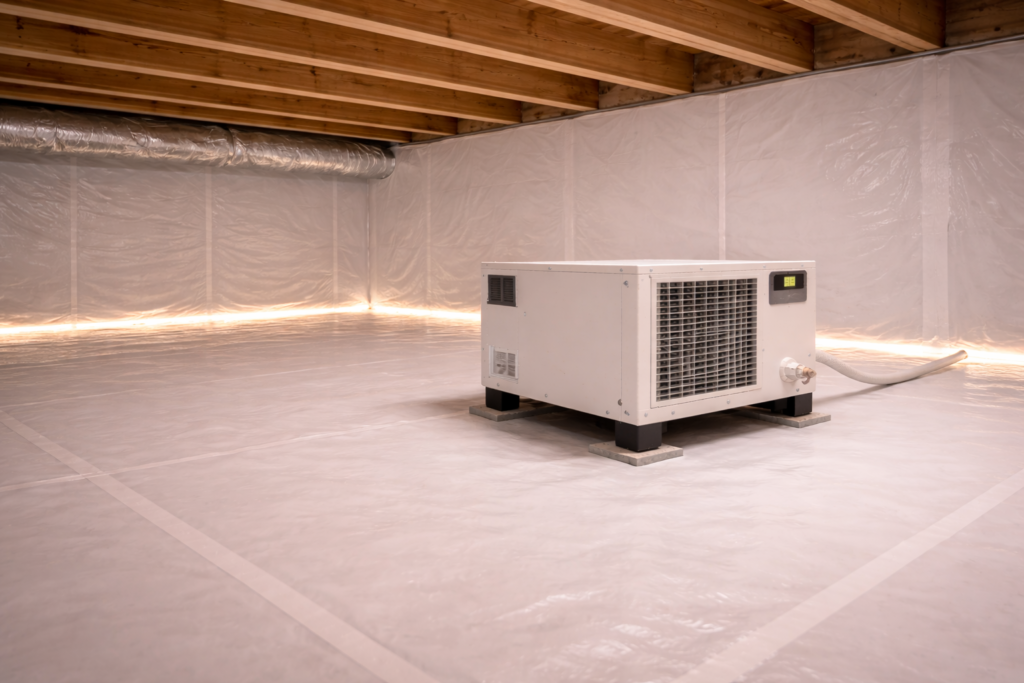
The best dehumidifier for an encapsulated crawl space is a crawl space or whole-house unit that can maintain stable humidity in a sealed environment without relying on a standard portable room dehumidifier. For most encapsulated crawl spaces, the AprilAire E080W Smart Wi-Fi Whole-House Dehumidifier is the strongest starting point because it suits buyers who want integrated humidity control, while the best final choice depends on crawl space size, moisture load, drainage layout, and how much control or capacity the space needs.
An encapsulated crawl space is usually easier to control than an open vented crawl space, but it can still hold moisture if humidity rises, drainage is poor, or air movement is limited. The goal is not just to dry the space once. The goal is to keep relative humidity stable over time so the vapor barrier, framing, insulation, and stored mechanical systems stay better protected.
Quick Picks
- Best overall for encapsulated crawl spaces: AprilAire E080W Smart Wi-Fi Whole-House Dehumidifier
- Best complete crawl space kit option: E070 Pro Dehumidifier Bundle – 70 Pint Whole House Dehumidifier – Full Complete Kit – Crawl Spaces
- Best for larger sealed crawl spaces: ALORAIR Basement/Crawlspace Dehumidifiers
An encapsulated crawl space around 2,000 sq ft may not need the same unit as a wet or vented crawl space of the same size. Our best crawl space dehumidifier for 2,000 sq ft guide explains when a moderate unit is enough and when a stronger option makes more sense.
AprilAire E080W Smart Wi-Fi Whole-House Dehumidifier

A smart Wi-Fi whole-house option for encapsulated crawl spaces and integrated humidity control. Check current price
The AprilAire E080W Smart Wi-Fi Whole-House Dehumidifier is the best overall choice on this page because it fits the main need of an encapsulated crawl space: stable humidity control in a sealed environment. It is best suited to homeowners who want something more integrated than a basic portable unit, especially when regular crawl space access is inconvenient.
Best for: Encapsulated crawl spaces, sealed foundation areas, and homeowners who want smart Wi-Fi humidity control.
Main advantage: Smart Wi-Fi control can make monitoring and adjustment easier, which matters when the dehumidifier is installed in a space that is not checked every day.
Main limitation: It may require more installation planning than a simple standalone crawl space unit, especially if it is being used as part of a broader whole-house humidity setup.
E070 Pro Dehumidifier Bundle – 70 Pint Whole House Dehumidifier – Full Complete Kit – Crawl Spaces
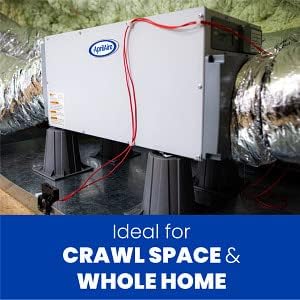
A crawl space and whole-house dehumidifier bundle for sealed spaces that need a practical complete setup. Check current price
The E070 Pro Dehumidifier Bundle is a strong alternative for an encapsulated crawl space where the buyer wants a complete crawl space-focused setup. It makes sense for sealed spaces with normal to moderate humidity control needs, especially when the goal is steady operation rather than emergency drying.
Best for: Encapsulated crawl spaces where a complete kit-style crawl space dehumidifier is more important than smart Wi-Fi control.
Main advantage: The bundle positioning makes it practical for homeowners who want a purpose-built crawl space option without piecing together separate components.
Main limitation: It may not be the best choice for a very large or persistently wet crawl space where a higher-capacity crawlspace-focused model would be more appropriate.
ALORAIR Basement/Crawlspace Dehumidifiers
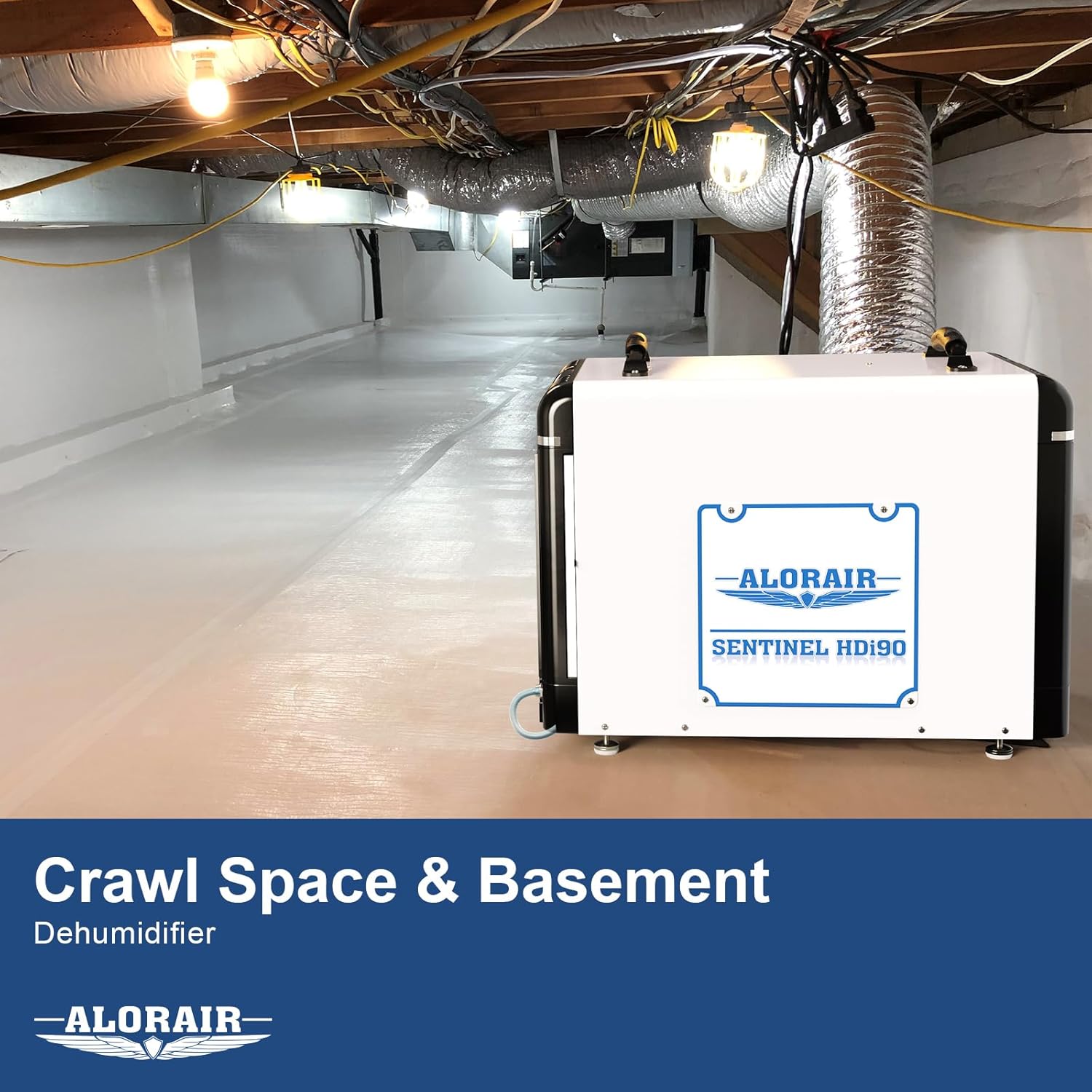
A basement and crawlspace-focused option for larger encapsulated areas or stronger moisture-control needs. Check current price
The ALORAIR Basement/Crawlspace Dehumidifiers option is the better fit for buyers with a larger encapsulated crawl space or stronger moisture load. Even after encapsulation, some crawl spaces still need a more capable crawlspace-focused unit because of climate, foundation conditions, air leakage, or leftover moisture in building materials.
Best for: Larger encapsulated crawl spaces, basement-adjacent moisture problems, and sealed areas that need stronger crawlspace-focused performance.
Main advantage: It gives buyers a crawlspace and basement-focused direction when a standard indoor dehumidifier would not be a suitable long-term choice.
Main limitation: The exact model configuration should be checked on the product listing because capacity, drainage setup, and included features can vary.
What to Look For
- Choose stable humidity control over one-time drying: An encapsulated crawl space needs a dehumidifier that can maintain humidity over time, not just dry the space after a wet period.
- Match the unit to the sealed space size: A small encapsulated crawl space with mild humidity may not need the same capacity as a wide, damp, or basement-connected crawl space.
- Check the drainage route: Even in a sealed crawl space, the dehumidifier still needs reliable continuous drainage so it can run without manual emptying.
- Consider monitoring access: If the crawl space is difficult to enter, smart control or easier external monitoring can be more useful than it would be in a normal room.
- Do not ignore moisture sources: Encapsulation helps, but drainage problems, plumbing leaks, open gaps, or poor exterior grading can still make the dehumidifier work harder.
- Avoid standard room units for permanent setups: Portable room dehumidifiers are usually not designed for long-term crawl space placement, drainage, airflow, and access challenges.
Final Recommendation
For most encapsulated crawl spaces, the AprilAire E080W Smart Wi-Fi Whole-House Dehumidifier is the best overall choice because it suits sealed-space humidity control and offers smart Wi-Fi monitoring for a hard-to-access area.
The E070 Pro Dehumidifier Bundle – 70 Pint Whole House Dehumidifier – Full Complete Kit – Crawl Spaces is the better alternative for buyers who want a complete crawl space-focused kit without prioritising smart control. The ALORAIR Basement/Crawlspace Dehumidifiers option is the better fit for larger encapsulated crawl spaces or sealed areas with stronger moisture-control needs.
Buyers should avoid choosing a heavy-duty direction just because the crawl space is encapsulated. If the space is small, sealed, and only mildly humid, a larger unit may be unnecessary. However, buyers should also avoid using a standard portable room dehumidifier as a permanent crawl space solution when the space needs continuous, reliable humidity control.