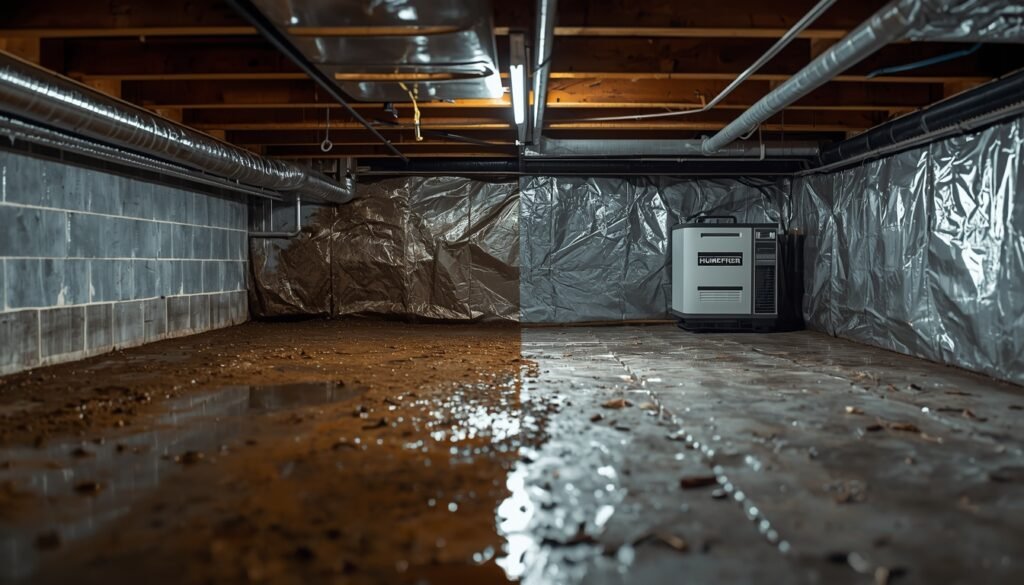
In most homes, it typically takes anywhere from a few days to several weeks to fully dry a crawl space, depending on moisture levels, crawl space size, and how well the area is sealed. A common issue is expecting fast results, but many people find that drying takes longer when moisture has built up over time or continues to enter the space.
In most homes, crawl space drying is a gradual process. A common issue is assuming that installing a dehumidifier will fix the problem immediately. Many people find that while humidity starts to drop quickly, it takes longer for moisture trapped in materials and surfaces to fully dry out.
What Affects How Long It Takes to Dry
- Size of the crawl space
- Level of existing moisture
- Whether the space is sealed or vented
- Strength and size of the dehumidifier
- Ongoing moisture sources
These factors determine whether drying takes a few days or several weeks.
Typical Timeframes for Drying
In mild cases, where moisture levels are only slightly elevated, many crawl spaces begin to feel drier within a few days. A common issue is light humidity that has not yet saturated materials.
In moderate cases, many people find that it takes one to two weeks to see consistent improvement. This typically happens when the crawl space has been damp for some time but is not heavily saturated.
In more severe cases, drying can take several weeks or longer. This typically happens when moisture has built up in wood, insulation, and the ground, requiring time for those materials to release moisture into the air.
Why It Often Takes Longer Than Expected
In most homes, drying a crawl space is not just about removing moisture from the air.
A common issue is overlooking moisture stored in materials. Many people find that even when the air feels drier, surfaces can still hold moisture.
This typically happens because:
- Wood absorbs and releases moisture slowly
- Insulation can retain dampness
- Soil continuously releases moisture into the space
The dehumidifier must remove moisture from all of these sources over time.
The Role of a Dehumidifier
A crawl space dehumidifier helps speed up the drying process, but it does not instantly eliminate moisture.
A common issue is expecting the unit to solve everything on its own. Many people find that results improve significantly when the crawl space is properly prepared.
This typically happens when:
- The unit is correctly sized
- The system runs continuously
- Moisture sources are controlled
If you are unsure how effective these systems are, it helps to review do crawl space dehumidifiers actually work to understand their role in moisture control.
When Drying Takes Too Long
If your crawl space is not drying as expected, there may be an underlying issue.
A common issue is ongoing moisture entering the space. Many people find that humidity remains high despite running a dehumidifier.
This typically happens when:
- The crawl space is not sealed
- Ground moisture is not controlled
- Drainage problems exist
If this sounds familiar, it helps to review why your crawl space is still damp after using a dehumidifier to identify possible causes.
How to Speed Up the Drying Process
- Ensure the dehumidifier is correctly sized
- Seal vents and air gaps
- Install a vapor barrier if needed
- Improve drainage around the home
- Allow continuous operation of the unit
These steps often reduce drying time significantly.
What Affects Long-Term Results
- Quality of crawl space sealing
- Control of external moisture sources
- Proper drainage setup
- Ongoing maintenance of the system
These factors determine whether the crawl space stays dry after the initial drying process.
Realistic Expectations
In most homes, crawl space drying is not immediate. A common issue is expecting instant results when the process naturally takes time.
Many people find that once moisture levels begin to drop, conditions continue to improve steadily. This typically leads to a more stable and controlled environment over time.
Understanding this helps avoid frustration and ensures the system is used effectively.
Final Thoughts
In most homes, drying a crawl space takes time because moisture must be removed from both the air and surrounding materials. A common issue is expecting fast results without addressing underlying conditions.
Many people find that once the crawl space is properly sealed and the dehumidifier is correctly sized, the drying process becomes more predictable. This typically leads to long-term moisture control and a healthier space.
By focusing on both the system and the environment, you can achieve consistent results and avoid ongoing dampness issues.
Related Guides
Where Should You Place a Dehumidifier in a Crawl Space?
Do Crawl Space Dehumidifiers Need a Drain Line?
Crawl Space Dehumidifier Maintenance Checklist