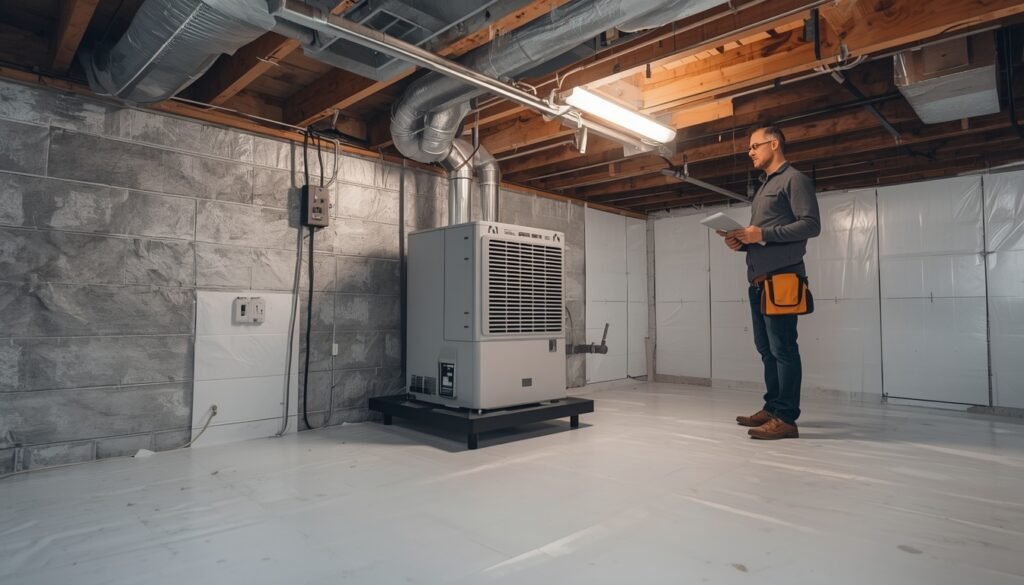
Crawl space dehumidifier cost can range from a few hundred dollars for a basic unit to several thousand dollars for a professionally installed crawl space moisture-control setup. The final cost depends on the dehumidifier size, crawl space condition, drainage setup, electrical requirements, and whether the space is already sealed or encapsulated.
For many homeowners, the dehumidifier itself is only part of the total cost. Installation, pump drainage, dedicated electrical work, drain routing, encapsulation, and long-term running costs can all affect the real budget.
Quick Cost Overview
These are general planning ranges only. A simple replacement in a clean sealed crawl space may cost far less than a damp, vented, hard-to-access crawl space that needs drainage, electrical work, and sealing improvements.
What Affects Crawl Space Dehumidifier Cost?
The biggest cost factor is not just the dehumidifier. It is the condition of the crawl space and how much work is needed to make the unit operate properly.
A sealed, dry, easy-to-access crawl space may only need the right unit, a drain route, and a suitable outlet. A wet or vented crawl space may need drainage fixes, air sealing, encapsulation, or a higher-capacity dehumidifier before humidity can be controlled reliably.
- Crawl space size: Larger spaces usually need more capacity and better airflow planning.
- Moisture severity: A damp, musty, or wet crawl space may need a stronger unit and more moisture-control work.
- Drainage route: Gravity drainage is usually simpler, while pump drainage can add cost and planning.
- Electrical setup: Larger or permanent units may need a suitable outlet, GFCI protection, or dedicated circuit planning.
- Access difficulty: Tight, low, or awkward crawl spaces can increase installation labor.
- Encapsulation status: A sealed crawl space is usually easier to control than an open or vented one.
If you are still choosing a unit, start with What Size Dehumidifier Do I Need for a Crawl Space? before comparing prices.
Unit Cost vs Installed Cost
The unit cost is the price of the dehumidifier itself. Installed cost includes the dehumidifier plus the labor and materials needed to make it work correctly in the crawl space.
This distinction matters because a cheaper unit can become expensive if it needs extra drainage work, pump setup, electrical changes, or repeated service visits. A more expensive crawlspace-rated unit may be better value if it is correctly sized and easier to install.
For example, a pump-equipped unit may cost more than a gravity-drain model, but it can be the better choice if the crawl space has no simple downhill drain route. A higher-capacity unit may cost more upfront, but it may be necessary if the crawl space is large, damp, or repeatedly difficult to dry.
For general product options, see Best Crawl Space Dehumidifier.
How Much Does Installation Cost?
Installation cost depends on how simple or difficult the crawl space setup is. A straightforward installation may involve placing the unit, connecting the drain hose, setting the humidity target, and confirming that the outlet is suitable.
A more involved installation may include routing a pump discharge line, adding or moving an outlet, improving drainage, sealing vents, adding a vapor barrier, or making the space easier to access for maintenance.
The more permanent the installation, the more planning matters. A dehumidifier that will run for years in a crawl space should not rely on awkward hose placement, temporary power, or a location that cannot be serviced.
For installation planning, see How to Install a Crawl Space Dehumidifier and Where Should You Place a Dehumidifier in a Crawl Space?.
Drainage and Pump Costs
Drainage is one of the most important cost factors. A crawl space dehumidifier needs to remove water continuously, so a bucket-style setup is usually not practical for long-term crawl space use.
If the unit can drain downhill to a safe discharge point, gravity drainage may be the simplest option. If water needs to move upward, across the crawl space, or to a drain point that is not lower than the unit, a pump-equipped dehumidifier may be needed.
Pump drainage can add cost, but it may also make placement more flexible. This matters because the best location for airflow is not always the easiest location for a drain hose.
If drainage is the main issue, compare Best Crawl Space Dehumidifier with Pump, Do Crawl Space Dehumidifiers Need a Drain Line?, and Gravity Drain vs Pump Drain for Crawl Space Dehumidifiers.
Electrical Costs
Electrical cost depends on whether the crawl space already has a suitable outlet and whether the dehumidifier can safely use the existing circuit. Some smaller units may use a standard properly rated outlet, while larger or permanent crawl space installations may need more careful electrical planning.
A dedicated circuit may be recommended for higher-capacity units, pump-equipped models, or installations where the dehumidifier will run often. GFCI protection and proper grounding are also important because crawl spaces can be damp environments.
Electrical work should not be handled casually. If the outlet location, circuit load, or code requirements are unclear, a licensed electrician should check the setup before the dehumidifier is installed.
For more detail, see Do You Need a Dedicated Circuit for a Crawl Space Dehumidifier?.
Running Cost Over Time
The running cost of a crawl space dehumidifier depends on the unit’s wattage, how often it runs, the humidity setting, local electricity rates, and the condition of the crawl space.
A properly sized unit in a sealed crawl space should usually cycle once humidity stabilizes. A unit in a vented, damp, or poorly sealed crawl space may run much more often because new moisture keeps entering the space.
If a dehumidifier runs constantly, the operating cost can become more noticeable. Constant runtime may also be a sign that the unit is undersized, poorly placed, set too low, or fighting a moisture problem that should be fixed separately.
For more help, see How Much Does It Cost to Run a Crawl Space Dehumidifier? and Do Crawl Space Dehumidifiers Run All the Time?.
When a Higher-Priced Unit Is Worth It
A higher-priced crawl space dehumidifier can be worth it when the space is large, damp, difficult to drain, or important to protect long term. It may also be worth paying more for a crawlspace-rated unit instead of using a standard room dehumidifier that is not suited to permanent crawl space conditions.
Higher-capacity and commercial-style units make more sense when the crawl space has persistent humidity, musty odors, heavy moisture, rental property concerns, or a history of dampness returning after temporary fixes.
- Large crawl spaces: Bigger areas may need stronger capacity and better airflow.
- Persistent dampness: A light-duty unit may run constantly without solving the problem.
- Pump drainage needs: Built-in pump drainage may be worth paying for if gravity drainage is not practical.
- Encapsulated crawl spaces: A better unit may protect the investment in sealing and vapor control.
- Commercial-style use: Rental, restoration, or heavy-duty applications may justify a stronger unit.
For heavier moisture problems, compare Best Commercial Crawl Space Dehumidifier.
When You Might Not Need the Most Expensive Option
The most expensive crawl space dehumidifier is not always the best choice. A sealed, mildly damp crawl space may not need a heavy-duty commercial-style unit.
Overspending can happen when buyers choose by maximum capacity instead of matching the unit to the actual moisture load. A moderate crawlspace-rated unit may be enough if the crawl space is clean, sealed, easy to drain, and only slightly above the ideal humidity range.
It is usually better to fix obvious moisture sources first. Standing water, poor grading, leaking pipes, open vents, or missing vapor barrier sections can make any dehumidifier work harder than it should.
If your crawl space is sealed, see Do You Need a Dehumidifier in a Sealed Crawl Space? and Best Dehumidifier for Encapsulated Crawl Space.
Crawl Space Dehumidifier Cost Checklist
Before budgeting, think about the full project rather than only the dehumidifier price.
Ask these questions:
- How large is the crawl space? Size affects capacity, airflow, and whether one unit is enough.
- How damp is the space? Heavy moisture may require a stronger unit and moisture-source repairs.
- Is the crawl space sealed or vented? Vented spaces may cost more to control because humid air can keep entering.
- Will gravity drainage work? If not, a pump-equipped unit or pump setup may be needed.
- Is the outlet suitable? Electrical work can add cost if the existing setup is not appropriate.
- Can the unit be serviced? Filter access, hose checks, and pump inspection matter after installation.
- Are there bulk water issues? Standing water, leaks, and drainage failures should be fixed before relying on a dehumidifier.
This checklist helps avoid the common mistake of buying a unit first and discovering later that the crawl space needs drainage, electrical, or moisture-control work before the dehumidifier can perform properly.
Frequently Asked Questions
How much does a crawl space dehumidifier cost?
The dehumidifier itself can cost from several hundred dollars to $2,000 or more depending on capacity, pump drainage, controls, and build quality. Installed project cost can be higher if the crawl space needs drainage work, electrical work, encapsulation, or moisture repairs.
Is a crawl space dehumidifier worth the cost?
It can be worth the cost if the crawl space has high humidity, musty odors, damp framing, mold concerns, or moisture that could affect the home over time. It is less useful if bulk water or leaks are not fixed first.
Does pump drainage increase the cost?
Yes, pump drainage can increase cost, but it may be necessary if gravity drainage is not practical. A pump can make installation more flexible when water needs to move upward or across the crawl space.
Can I install a crawl space dehumidifier myself?
Some homeowners may handle a simple plug-in and gravity-drain setup, but professional installation is often better when drainage, electrical work, pump routing, encapsulation, or crawl space access is complicated.
What is the cheapest way to dehumidify a crawl space?
The cheapest option is not always the best long-term solution. The most cost-effective approach is usually to fix major moisture sources first, choose a correctly sized crawlspace-rated unit, and set up reliable continuous drainage.
Final Thoughts
Crawl space dehumidifier cost depends on much more than the price of the unit. The real budget includes sizing, drainage, electrical setup, installation difficulty, crawl space condition, and long-term running cost.
A basic unit may be enough for a small, sealed, mildly damp crawl space. A larger, wet, vented, or harder-to-control space may need a stronger crawlspace-rated or commercial-style unit with pump drainage and professional installation.
The best value is not always the cheapest option or the most expensive one. It is the dehumidifier setup that matches the crawl space size, moisture load, drainage route, electrical setup, and long-term maintenance needs.