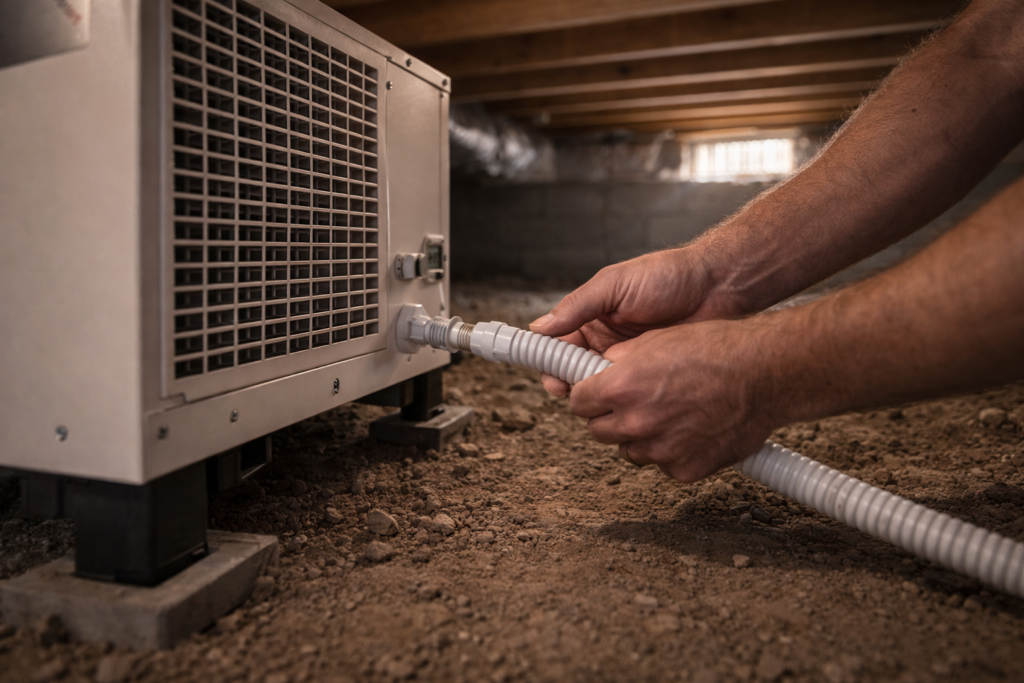
Installing a crawl space dehumidifier correctly is just as important as choosing the right size. Proper installation ensures stable humidity control, reliable drainage, and efficient long-term operation.
Most crawl space units are designed for straightforward installation, but careful planning makes the process smoother.
Step 1: Confirm Proper Sizing
Before installing, make sure the unit is correctly sized for your space.
Check:
-
Square footage
-
Moisture level
-
Crawl space type (sealed or vented)
If you have not verified sizing, review What Size Dehumidifier Do I Need for a Crawl Space?
For full selection guidance, see How to Choose a Crawl Space Dehumidifier.
Step 2: Choose the Installation Location
Place the unit:
-
Near the center of the crawl space if possible
-
On a level, stable surface
-
With adequate clearance around air intake and exhaust
Avoid:
-
Tight corners
-
Direct contact with insulation
-
Blocking support beams
For detailed placement guidance, read Where Should You Place a Dehumidifier in a Crawl Space?
Step 3: Set Up the Drainage System
Most crawl space dehumidifiers use continuous drainage.
There are two main options:
Gravity drain
The hose must slope downward to a sump pit or floor drain.
Built-in condensate pump
Allows water to be discharged upward or across longer distances.
Ensure:
-
The hose has no kinks
-
Connections are secure
-
Water flows freely
If you’re unsure which setup your crawl space requires, see Do Crawl Space Dehumidifiers Need a Drain Line?
Proper drainage is critical. Without it, the unit cannot operate continuously.
Step 4: Connect Power Safely
Plug the unit into a grounded outlet.
Avoid:
-
Extension cords
-
Overloaded circuits
-
Non-grounded outlets
If your crawl space outlet is exposed to moisture, consider a GFCI-protected outlet for safety.
Step 5: Set the Humidity Level
Once powered on, set the humidistat between:
45%–55% relative humidity
This range helps prevent mold growth while avoiding over-drying.
If you are unsure about correct humidity targets, review Ideal Humidity Level for a Crawl Space.
Step 6: Monitor Initial Operation
During the first few days:
-
Check that water is draining properly
-
Confirm humidity is decreasing
-
Listen for unusual cycling
A properly sized unit should run longer at first while reducing humidity, then cycle normally once the target range is reached.
If runtime seems excessive, you may want to revisit How Many Pints Should a Crawl Space Dehumidifier Be?
Maintenance After Installation
After installation:
-
Check the air filter regularly
-
Inspect the drain line periodically
-
Monitor humidity seasonally
Routine inspection helps ensure consistent performance.
For overall comparisons and model guidance, see Best Crawl Space Dehumidifier.
Final Thoughts
Installing a crawl space dehumidifier involves:
-
Proper sizing
-
Correct placement
-
Reliable drainage
-
Safe electrical connection
-
Balanced humidity settings
When installed correctly, the unit should operate efficiently and maintain stable humidity levels throughout the year.