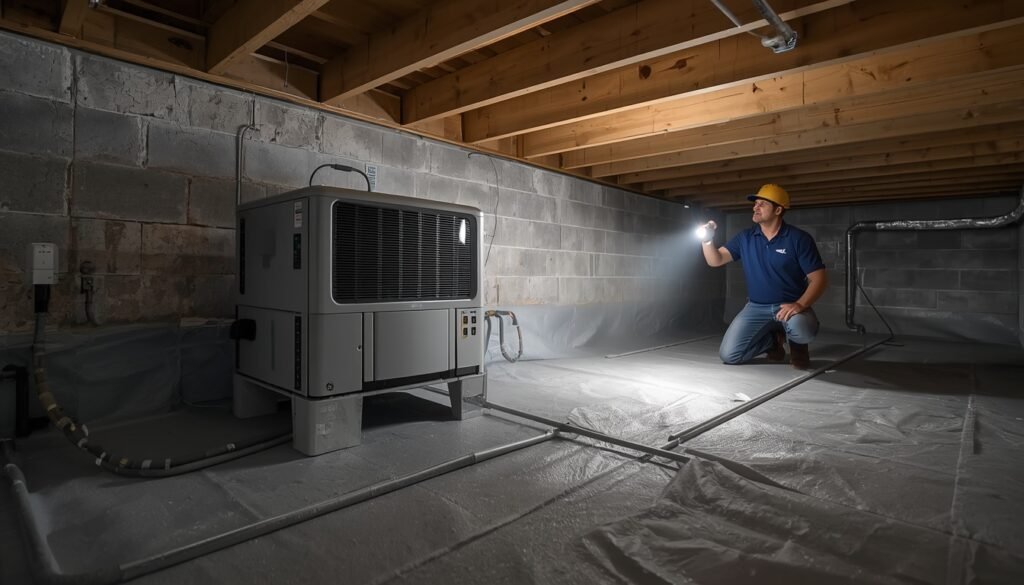
Yes, a crawl space dehumidifier can be worth it when the crawl space has high humidity, musty odors, damp framing, condensation, or conditions that could support mold growth. It is most useful when the moisture problem is caused by humidity rather than active flooding or standing water. It should be viewed as part of crawl space moisture control, not as a complete fix for every water problem.
How It Works
A crawl space dehumidifier works by pulling damp air across cold coils, condensing moisture from the air, and draining that water away through a hose, pump, or drain line. The unit then releases drier air back into the crawl space.
The goal is to keep relative humidity in a safer range so the space is less likely to stay damp, musty, or mold-friendly. Once the target humidity is reached, a properly sized unit should cycle on and off instead of running constantly.
What It Can Do
A crawl space dehumidifier can be useful because humidity problems often develop slowly and affect the home over time. It does not need to make the crawl space perfectly dry. Its job is to keep moisture levels stable enough to reduce the risk of long-term dampness.
- Lower high relative humidity in the crawl space
- Reduce musty odors caused by damp air
- Help protect wood framing from prolonged moisture exposure
- Support an encapsulated or sealed crawl space system
- Make the crawl space less favorable for mold-related moisture conditions
These benefits are strongest when the unit is correctly sized, placed where air can circulate, and connected to reliable continuous drainage. A dehumidifier is most effective when obvious moisture sources have already been addressed, such as open vents, exposed soil moisture, plumbing leaks, poor grading, or drainage problems around the foundation.
Limitations and What It Cannot Do
A crawl space dehumidifier cannot fix every moisture problem by itself. It controls humidity in the air, but it is not designed to solve standing water, flooding, foundation leaks, bad grading, or a missing vapor barrier.
If water is entering the crawl space after rain, that problem should be corrected before relying on a dehumidifier. Otherwise, the unit may run constantly and still fail to keep the space dry.
It also cannot compensate for poor sizing or bad installation. A unit that is too small, poorly placed, or connected to an unreliable drain route may not maintain the target humidity. If cost is part of the decision, compare the full setup in our crawl space dehumidifier cost guide rather than looking only at the price of the unit.
When It Works Best
A crawl space dehumidifier works best in a sealed or encapsulated crawl space where outside air and ground moisture are limited. In that type of setup, the unit is maintaining humidity rather than constantly fighting new moisture entering the space.
It can also work in some vented crawl spaces, but performance may be less predictable in humid climates. Open vents can allow damp outdoor air to enter, which may make the unit run longer and reduce efficiency.
The best results usually come from combining the dehumidifier with basic moisture-control steps: sealing major air leaks, using a vapor barrier, managing exterior drainage, keeping drain lines clear, and checking humidity with a separate hygrometer when needed.
Common Misconceptions
One common misconception is that a dehumidifier can replace crawl space repairs. It cannot. If the crawl space has standing water, plumbing leaks, or drainage failures, those issues need to be fixed separately.
Another misconception is that the largest dehumidifier is always the best choice. A larger unit may be useful for heavy moisture, but the correct size depends on square footage, moisture severity, sealing, drainage, and airflow.
It is also not true that a dehumidifier should run all the time. Long runtime can be normal during initial drying or humid weather, but constant operation after the space stabilizes may indicate sizing, placement, drainage, or moisture-intrusion problems.
Final Answer Summary
A crawl space dehumidifier is worth considering when humidity is the main problem and the unit is matched to the space. It can help control damp air, musty odors, and moisture conditions that may affect the crawl space over time.
It is not a substitute for fixing leaks, standing water, poor drainage, or major air and ground moisture problems. The best results come when the dehumidifier is part of a complete crawl space moisture-control setup.