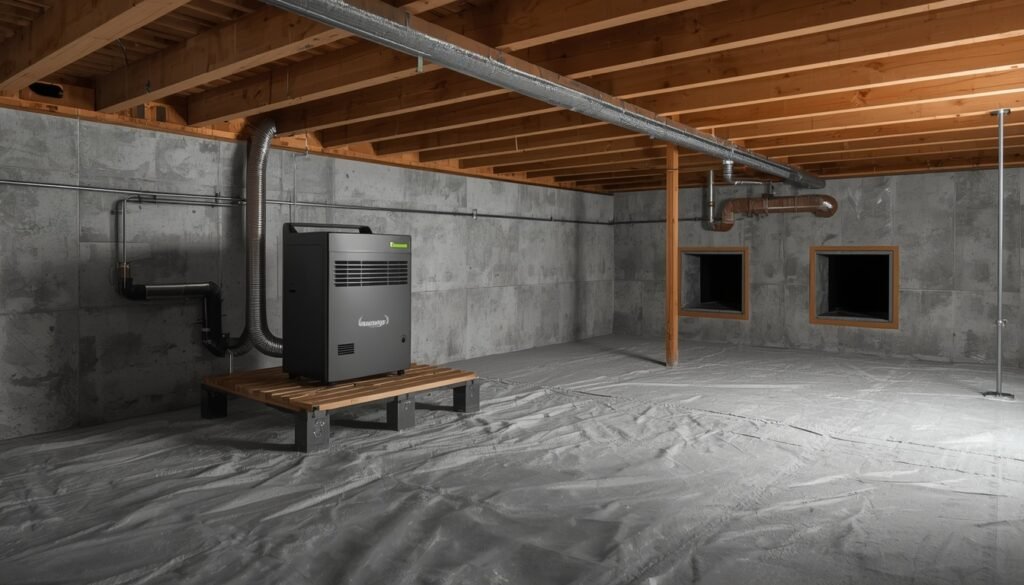
A crawl space dehumidifier and crawl space ventilation are two different ways of dealing with moisture, but they do not work the same way. Ventilation brings outside air into the crawl space, while a dehumidifier actively removes moisture from the air already inside the space.
In many humid climates, a crawl space dehumidifier is usually more reliable than ventilation because outdoor air can already contain high moisture. Ventilation may help in some dry conditions, but it can also make a crawl space wetter if humid outside air keeps entering.
Crawl Space Dehumidifier vs Ventilation Comparison
How Ventilation Works
Crawl space ventilation works by allowing outside air to enter and move through the crawl space. This can happen through foundation vents, passive openings, or powered fans.
The idea is that air movement will help reduce trapped moisture. In dry climates or during dry seasons, this can sometimes help a crawl space air out.
The problem is that ventilation depends heavily on the quality of the outside air. If the outside air is humid, ventilation may bring more moisture into the crawl space instead of removing it.
This is one reason vented crawl spaces can be difficult to manage in warm or humid regions. The crawl space may keep receiving damp air even while the homeowner is trying to dry it.
How a Crawl Space Dehumidifier Works
A crawl space dehumidifier removes moisture from the air inside the crawl space. It pulls in damp air, condenses moisture into water, drains that water away, and releases drier air back into the space.
This gives the homeowner more direct control over humidity. Instead of depending on outdoor conditions, the dehumidifier works toward a set humidity target.
A dehumidifier is most effective when the crawl space is sealed, encapsulated, or at least protected from major outside air and ground moisture. If humid air constantly enters through vents and gaps, the unit may need to run longer.
If you are trying to decide whether the crawl space needs active humidity control, see Do You Need a Dehumidifier in a Sealed Crawl Space?.
Which Works Better in a Humid Climate?
In a humid climate, a crawl space dehumidifier is usually the better moisture-control option. Ventilation can bring humid outdoor air into the crawl space, which may increase moisture instead of reducing it.
This is especially important during warm months. Outdoor air may feel fresh, but if it has a high moisture content, it can raise crawl space humidity and contribute to musty odors, condensation, or damp materials.
A dehumidifier does not rely on outdoor air being dry. It actively removes moisture from the crawl space and helps maintain a more stable humidity level.
That does not mean ventilation is always useless. It means ventilation must be judged by climate, season, crawl space design, and humidity conditions, not assumed to be helpful in every home.
When Ventilation May Help
Ventilation may help when outdoor air is dry enough to reduce moisture inside the crawl space. This is more likely in dry climates, during certain seasons, or in spaces where the main issue is stale air rather than ongoing humidity.
However, ventilation is not a complete moisture-control system by itself. It does not remove water from the air in the same controlled way a dehumidifier does.
- Drier climates: Outdoor air may help reduce crawl space moisture when humidity is low.
- Seasonal airing: Ventilation may be useful during dry parts of the year.
- Stale air: Air movement may reduce odor buildup in some crawl spaces.
- Temporary drying: Ventilation may help after minor dampness if outside air is dry.
The main limitation is that ventilation can work against you when outdoor humidity is high. If damp outside air is entering the crawl space, more airflow may simply bring in more moisture. This is why many problem crawl spaces need sealing, drainage improvements, or active humidity control rather than more outside air.
When a Dehumidifier Is Better
A dehumidifier is usually better when the goal is stable humidity control. It is also better when the crawl space is sealed, encapsulated, musty, damp, or located in a humid climate.
Unlike ventilation, a dehumidifier directly lowers moisture in the air. This makes it more predictable when the crawl space needs to stay within a target humidity range.
- Humid climates: A dehumidifier can reduce moisture even when outdoor air is damp.
- Encapsulated crawl spaces: Active humidity control helps support a sealed system.
- Musty odors: Lower humidity can help reduce damp-air smells.
- Long-term control: A dehumidifier can cycle on and off to maintain stable conditions.
A dehumidifier still needs the right setup. It should be sized correctly, placed where air can move, connected to reliable drainage, and supported by basic moisture-control measures. If the unit is too small or the crawl space is still taking in water, the dehumidifier may run constantly without solving the full problem.
Can You Use Both?
In some homes, ventilation and dehumidification may both play a role, but they should not work against each other. If vents are bringing in humid air, the dehumidifier may have to run longer to remove the extra moisture.
A sealed or encapsulated crawl space usually relies less on outside ventilation and more on moisture control, vapor control, air sealing, and dehumidification. This can make humidity easier to manage because the crawl space is not constantly exposed to outdoor air.
In a vented crawl space, a dehumidifier may still help, but performance can be less predictable. The unit may need to work harder if outdoor humidity keeps entering through vents or gaps.
If your dehumidifier runs often, see Do Crawl Space Dehumidifiers Run All the Time?.
Common Mistakes
The biggest mistake is assuming that more airflow always means a drier crawl space. In humid weather, more airflow can mean more moisture entering the foundation area.
Another mistake is installing a dehumidifier without addressing obvious moisture sources. Standing water, poor grading, open vents, missing vapor barrier, and drainage problems can all make a dehumidifier work harder than necessary.
It is also a mistake to choose a dehumidifier only by price or square footage. Crawl space condition, humidity level, sealing, drainage, and airflow all affect the right size and setup.
For sizing help, see What Size Dehumidifier Do I Need for a Crawl Space?.
Final Recommendation
For most damp or humid crawl spaces, a dehumidifier is more reliable than ventilation because it actively removes moisture instead of depending on outdoor air conditions. Ventilation may help in dry conditions, but it can make moisture worse when outside air is humid.
The best approach depends on the crawl space. A sealed or encapsulated crawl space usually benefits from controlled dehumidification, while a vented crawl space may need broader moisture-control improvements before humidity becomes stable.
If the crawl space is musty, damp, or consistently humid, do not rely on ventilation alone. Check the source of moisture, improve drainage and sealing where needed, then use a properly sized dehumidifier if active humidity control is still required.